Miami-Dade Mayor Will Comply With President Trump's Immigration Executive Order, Ends De Facto Sanctuary Status
 President Donald J. Trump signed executive orders that targeted
sanctuary cities. Mayors from across the country—Portland, Chicago, New
York, and Los Angeles—vowed to defy
the new president’s directive. It once again we see the urban/rural
divide—with the former ready to fight to the death to avoid complying
with the new order in the same manner conservative fought Obamacare
through lawsuits. It could get messy, but the order has been given. One
county in Florida is going to rollback its de facto sanctuary status.
Miami-Dade Mayor Carlos Gimenez issued orders to his jails to start
complying with President Trump’s new directive (via Miami Herald):
President Donald J. Trump signed executive orders that targeted
sanctuary cities. Mayors from across the country—Portland, Chicago, New
York, and Los Angeles—vowed to defy
the new president’s directive. It once again we see the urban/rural
divide—with the former ready to fight to the death to avoid complying
with the new order in the same manner conservative fought Obamacare
through lawsuits. It could get messy, but the order has been given. One
county in Florida is going to rollback its de facto sanctuary status.
Miami-Dade Mayor Carlos Gimenez issued orders to his jails to start
complying with President Trump’s new directive (via Miami Herald):
Gimenez cited an executive order signed Wednesday by
President Donald Trump that threatened to cut federal grants for any
counties or cities that don’t cooperate fully with Immigration and
Customs Enforcement. Since 2013, Miami-Dade has refused to indefinitely
detain inmates who are in the country illegally and wanted by ICE — not
based on principle, but because the federal government doesn’t fully
reimburse the county for the expense.
In light of the provisions of the Executive Order, I direct you and
your staff to honor all immigration detainer requests received from the
Department of Homeland Security,” Gimenez wrote Daniel Junior, the
interim director of the corrections and rehabilitation department, in a
brief, three-paragraph memo.
Unlike cities like San Francisco, Miami-Dade never declared itself a
“sanctuary” and has resisted the label ever since the Justice Department
listed the county as one in a May 2016 report. Foreseeing Trump’s
crackdown on “sanctuary” jurisdictions, the county asked the feds to
review its status last year. A decision is still pending.
In an interview with the Miami Herald, Gimenez, a Republican who
attended Trump’s inauguration last week but said he voted for Hillary
Clinton, said he made a financial decision. Last year, the county
declined to hold some 100 inmates wanted by the feds.
Keeping them in
local jails would have cost about $52,000 — a relative drop in the
bucket for a county with a total annual budget of $7 billion.
In contrast, the county’s 2017 budget shows it’s counting on
receiving some $355 million in federal funds — money that subsidizes
elderly services, beds for the homeless, police officers and other
government expenses.
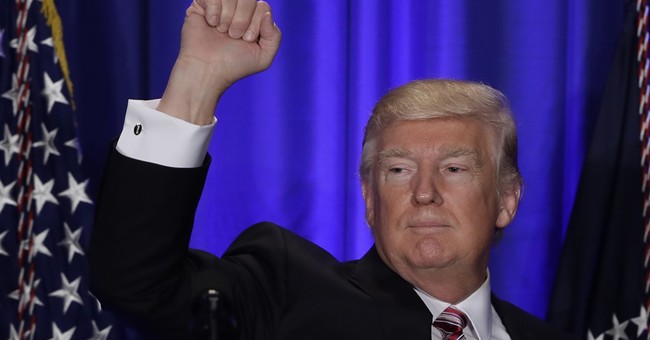 President Donald J. Trump signed executive orders that targeted
sanctuary cities. Mayors from across the country—Portland, Chicago, New
York, and Los Angeles—vowed to defy
the new president’s directive. It once again we see the urban/rural
divide—with the former ready to fight to the death to avoid complying
with the new order in the same manner conservative fought Obamacare
through lawsuits. It could get messy, but the order has been given. One
county in Florida is going to rollback its de facto sanctuary status.
Miami-Dade Mayor Carlos Gimenez issued orders to his jails to start
complying with President Trump’s new directive (via Miami Herald):
President Donald J. Trump signed executive orders that targeted
sanctuary cities. Mayors from across the country—Portland, Chicago, New
York, and Los Angeles—vowed to defy
the new president’s directive. It once again we see the urban/rural
divide—with the former ready to fight to the death to avoid complying
with the new order in the same manner conservative fought Obamacare
through lawsuits. It could get messy, but the order has been given. One
county in Florida is going to rollback its de facto sanctuary status.
Miami-Dade Mayor Carlos Gimenez issued orders to his jails to start
complying with President Trump’s new directive (via Miami Herald):
No comments:
Post a Comment