'Palestinian state may not be viable,’ Netanyahu tells EU leaders
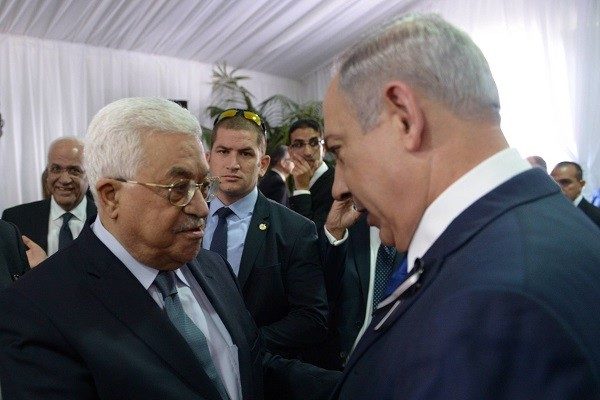
Rather than repeat his support for a two-state solution, Prime Minister Netanyahu chose to tell European leaders that a “Palestinian state” may not be viable. Asked directly whether he still supports a two-state solution, Netanyahu responded by asking the 28 EU foreign minister whether such a state would be like “Costa Rica or Yemen?” The message was not lost on his hosts.
The former is a stable democracy in Central America, while the latter is in a state of war-blighted anarchy.
Netanyahu told reporters on his plane home that European nations “spoil” the Palestinians while US President Donald Trump, by recognizing Jerusalem as Israelis capital was, “telling them the truth.”
Netanyahu said he spoke with the foreign ministers of “almost all of the 28 EU member states” and that the conversation was “respectful from both sides.”
Early in his visit Netanyahu accused Europe of “hypocrisy” and a “double standard” after leading European nations condemned Trump’s recognition of Jerusalem but failed to denounce rockets fired at Israel from Gaza.
Veteran Israeli diplomat Avi Pazner told World Israel News (WIN) that Netanyahu should feel pleased with his visits to Paris and Brussels. “Netanyahu was the first Israeli Prime Minister to visit the EU in 22 years. The meeting was scheduled before Trump’s announcement on Jerusalem, so you can imagine there were issues of disagreement.”
Pazner explained why Netanyahu chose not to reiterate his words from Bar Ilan University backing a two-state solution. “Most of Europe is committed to a two-state solution with east Jerusalem as the Palestinian capital. Netanyahu saying the words ‘two-state’ would have been well received.
Netanyahu chose to speak honestly and directly. I believe that the Prime Minister is moving away from the two-state solution because there is no Palestinian partner for peace talks and he lacks a coalition that would support him.”
Pazner said that a very significant part of the trip was Netanyahu’s two and a half hour meeting with French President Macron. A former Israeli Ambassador to France, Pazner told WIN, “The two leaders spoke about very significant and serious issues with much time spent discussing Iran, Syria and Iran.”
Pazner doubts much progress was made on the Jerusalem issue. “The Czech Republic may follow the US lead. I also expect 2 or 3 other European countries to follow suit, but they will not be the first,” Pazner said. Summing up the trip Pazner said, “It was more positive than expected or feared.."
Abbas pleads his case in Cairo
The Egyptian president’s office issued a statement ahead of Abbas’ arrival saying, “The summit will deal with the developments related to the US’ recognition of Jerusalem as Israel’s capital and ways to deal with the crisis that protect the Palestinian people’s rights, national holy sites and legitimate right to establish an independent state with Jerusalem as its capital.”
Professor Menachem Klein from Bar Ilan University told WIN, “The Trump speech was a game changer for Abbas. He needs a united Arab front to stand with him.” According to Klein, “Abbas knows that the US announcement also relates to the West Bank. Trump’s statement favoring a two-state solution ‘if that’s what the parties agree to’ is problematic for the Palestinians. It means that Netanyahu can veto the two-state idea.
Without the US as an honest broker, Abbas desperately needs Egypt and Jordan at his side.”
According to Professor Klein, Abbas is serious in his intention to boycott an upcoming visit of US Vice President Mike Pence. “There is real anger at the US across Palestinian society,” Klein said.

No comments:
Post a Comment