by Ben Bullard / Personal Liberty Digest

The verification document, the federal 1095A form, is supposed to be in the hands of every eligible tax filer by Jan. 31, 2015. Anyone who purchased health insurance through a government-funded exchange must file the form. But according to The Washington Times, tax professionals already foresee delays, not only with the January deadline, but for everything that follows afterward.
“It really strains credulity to think 1095A is not going to be a big problem,” Jackson Hewitt vice president for health programs George Brandes told The Times.
One major concern is the deadline itself: Many people receive their federal W-2 form much earlier than Jan. 31. Many of those same people simply aren’t yet aware of just how pervasively Obamacare’s financial stipulations will reach into other aspects of their financial lives and, therefore, may prepare and file their taxes before the 1095A form ever hits their door.
One tax professional interviewed for the Times piece said it’s “absolutely critical” that patients covered under Obamacare have the 1095A form before filing their taxes, but even then, it’s not clear that many will know what the form is for.
Also:
The IRS has released drafts of the forms taxpayers will see next year, but stakeholders are still waiting on instructions that explain how to calculate subsidy amounts to see if they correctly match up with a person’s income.So even if the forms do arrive on time and customers do know exactly what they’re for, they may still have a hard time figuring out the precise numbers they must share with the IRS (under penalty of perjury, no less).
In related Obamacare news last week, the Federal Reserve Bank of Philadelphia released its August business outlook survey, which revealed that businesses are dramatically altering their hiring patterns in order to avoid Obamacare’s coverage mandates for full-time employees.
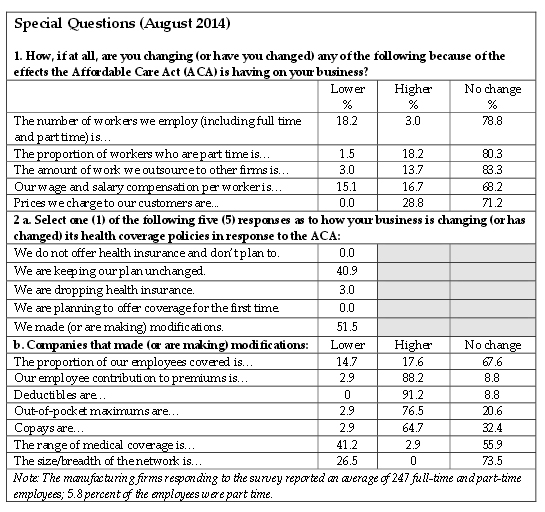
“In special questions this month, firms were asked qualitative questions about the effects of the Affordable Care Act (ACA) and how, if at all, they are making changes to their employment and compensation, including benefits,” the survey summary stated.
“Over 18 percent of the firms indicated that the number of workers was lower because of the ACA; 3 percent indicated higher levels. The same percentage (18 percent) indicated that the proportion of part-time workers had increased.”

No comments:
Post a Comment