 Israel only wised up to Damascus's bid for
nukes after it found Gaddafi had managed to run a similar program
covertly. Armed with the facts, Olmert had to decide whether to strike
Israel only wised up to Damascus's bid for
nukes after it found Gaddafi had managed to run a similar program
covertly. Armed with the facts, Olmert had to decide whether to strike
Main image by courtesy of Israel Defense Forces
Eight F-15s and F-16s took off from the Hatzerim and Ramon air bases, in the south of the country, an hour or so before midnight on September 5, and flew silently toward their target. Protected by sophisticated electronic jamming systems that blinded Syria’s air defenses, the Israeli planes had no trouble dropping tons of explosives on the target, which was camouflaged as an agricultural farm, and were able to confirm visually that, in three potent minutes, it had been flattened. The danger that an Arab enemy bordering Israel would attain the doomsday weapon was removed.
Israel’s top political-security echelon, then led by prime minister Ehud Olmert, defense minister Ehud Barak, chief of staff Gabi Ashkenazi, and other cabinet ministers and military and intelligence chiefs, sighed with collective relief at the news. Operation “Out of the Box” was a success.
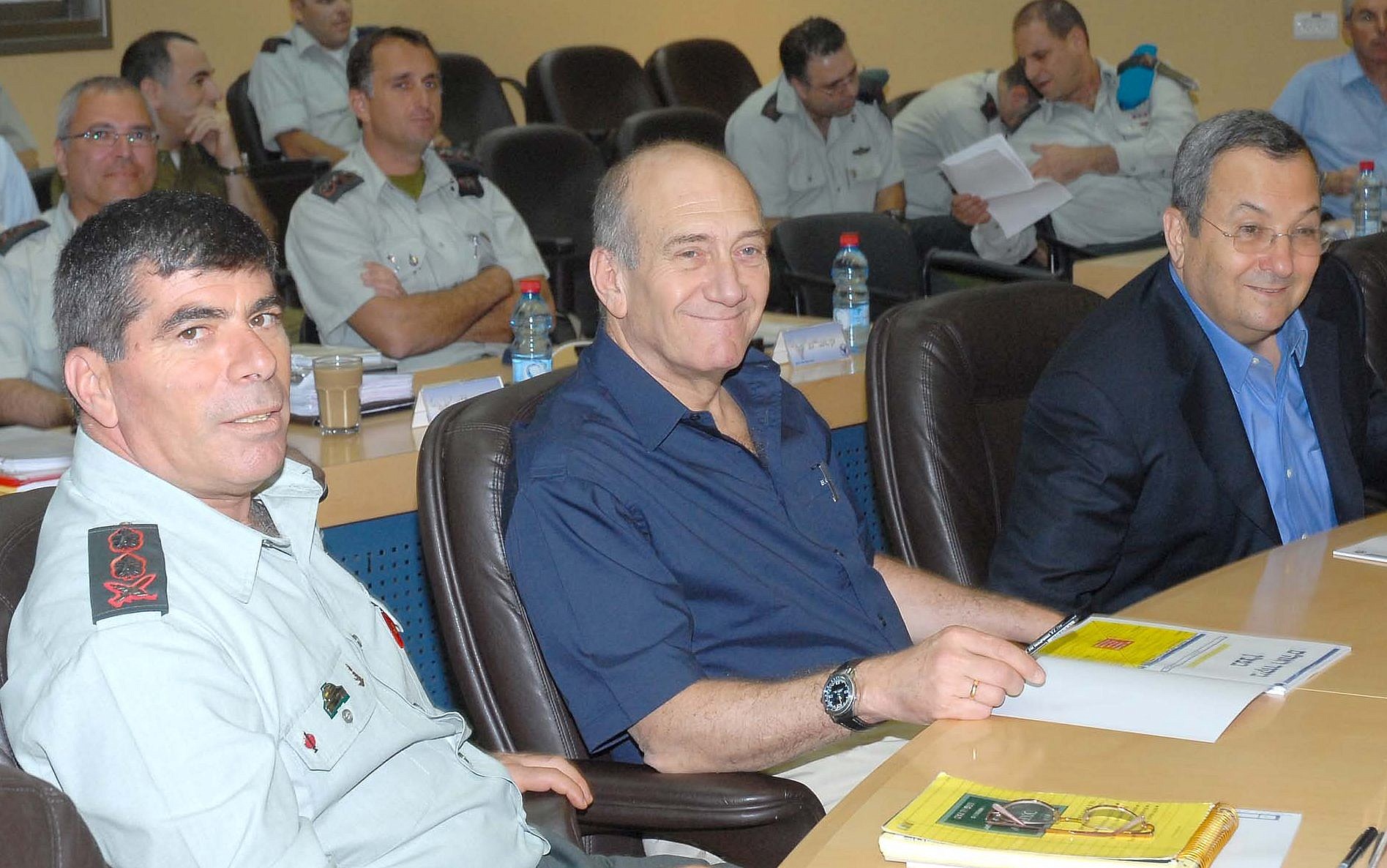
Prime minister Ehud Olmert (center) ,
defense minister Ehud Barak (right) and IDF chief of staff Gabi
Ashkenazi, during a visit to the IDF’s Northern Command in the Galilee,
August 14, 2007. (Moshe Milner/GPO/Flash90)
“There were no ceremonies, and no fanfare,” Major (now Colonel) T, one of the pilots of the “Hammers” squadron, told The Times of Israel in a recent interview. “Of course, we understood the historic significance of our accomplishment, but we had to restrain ourselves,” he said. “Secrecy and compartmentalization were of the utmost importance.” What had taken place that night was to remain on a strict need-to-know basis.
The destruction of President Bashar Assad’s nuclear reactor constitutes one of Israel’s most important, and most sensitive, military-strategic achievements in recent years. A decade later, however, it is still the subject of egotistical battles regarding credit and prestige between intelligence chiefs and political leaders. What’s more, to some extent, the entire saga actually began with what can only be described as an intelligence flop.
Under our noses
Tamir Pardo, who would later serve as director of the Mossad, was privy to the intelligence gathering and planning ahead of the 2007 strike, and he talks about it in terms not unlike those often used to describe the colossal failure of Israeli intelligence in the era before the Yom Kippur war of 1973.
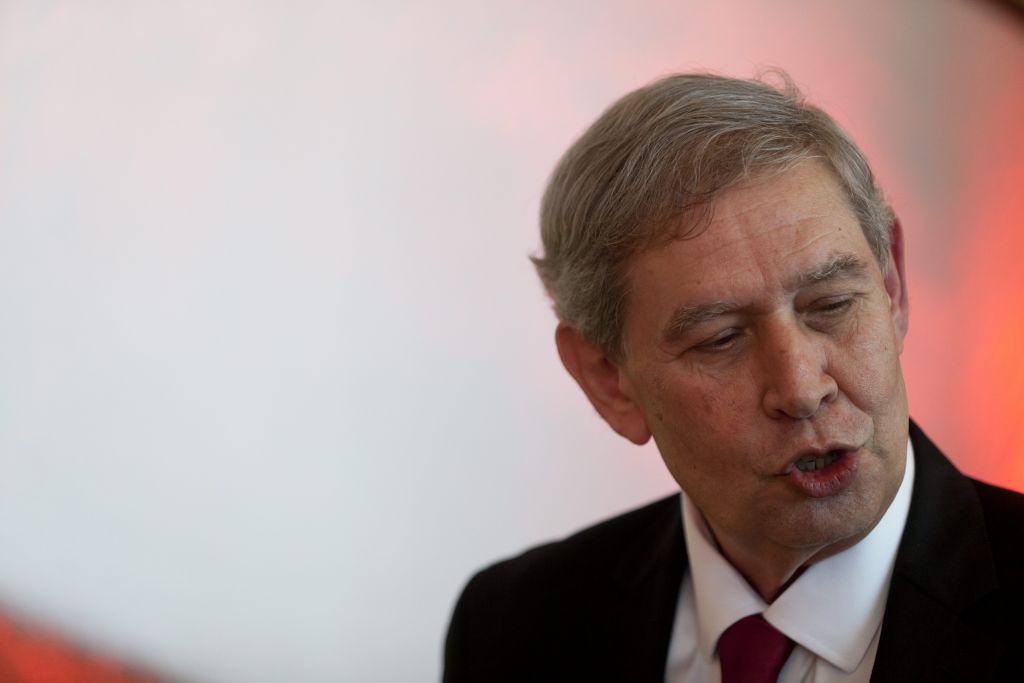
Tamir Pardo (David Vaaknin/POOL/FLASH90)
His words are echoed by Ram Ben-Barak, who headed one of the Mossad’s operations departments at the time. “Anyone who says that he knew that Syria was building a nuclear reactor — either doesn’t know or isn’t telling the truth. When we in the Mossad brought the information [on what the Syrians were up to], it was a complete surprise [to the rest of the Israeli defense establishment].
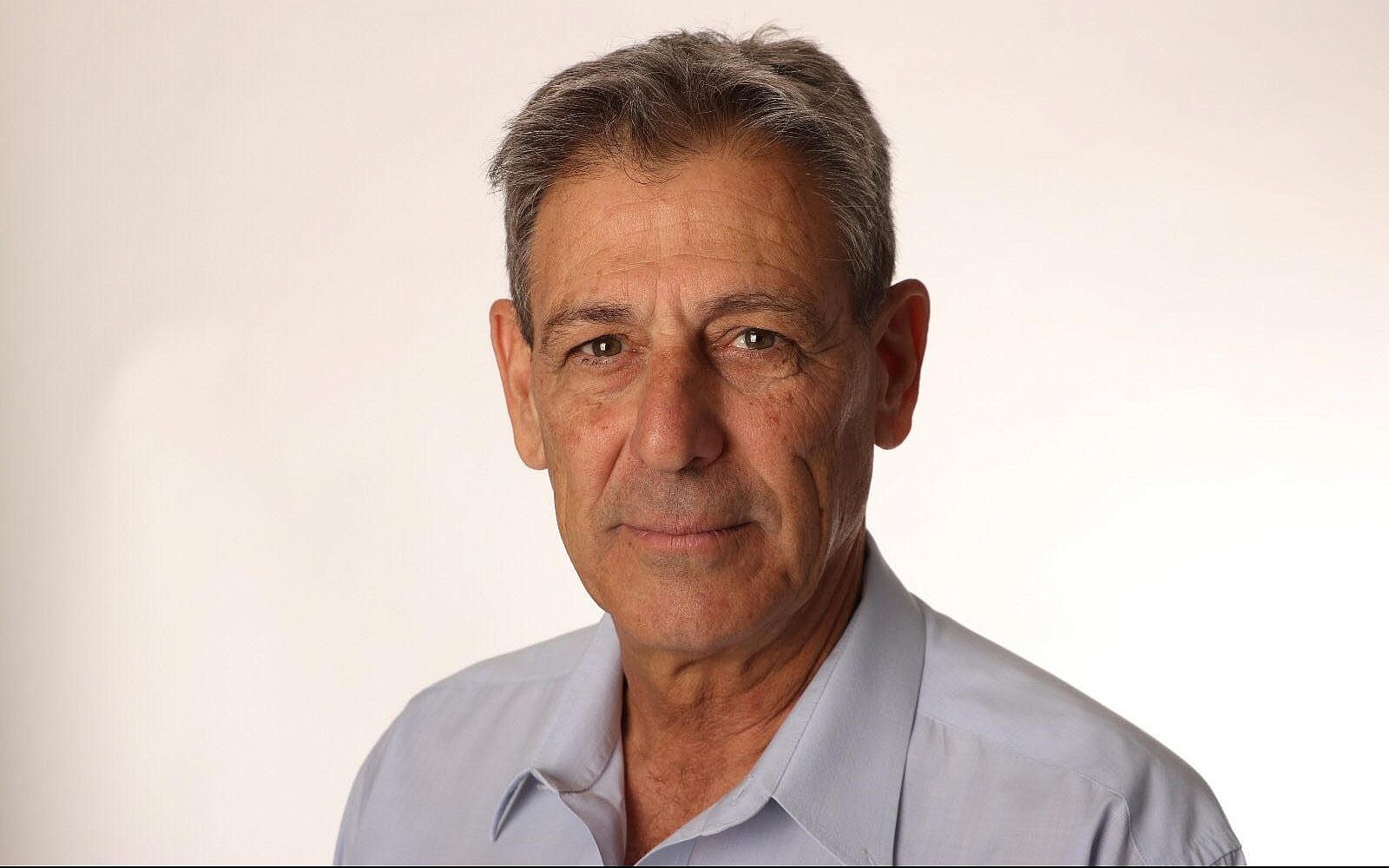
Ram Ben-Barak, former deputy director of the Mossad. (Assaf Feuerstein)
Within the IDF’s Military Intelligence directorate (Aman), however, a different story is told — in which Aman is front and center in uncovering Assad’s project. “The exposure of the reactor is one of the greatest achievements of Israeli intelligence in general and Aman in particular,” says Brig. Gen. Shalom Dror, who in 2007 was a major in charge of Aman’s research on Syria. Other former senior Aman officers say the same.
The Syrian facility was almost identical to the Yongbyon nuclear complex in North Korea, which produced plutonium for nuclear bombs. When Israel struck, the Syrians were only weeks away from beginning to produce highly radioactive materials.
Above and main picture: The pilot of an
F-15I fighter jet, from the Israeli Air Force’s 69th Squadron, gets into
his airplane ahead of an operation to bomb a Syrian nuclear reactor in
Deir Ezzor on September 5, 2007. (Israel Defense Forces)
Plainly, the decision by Olmert to blow up the complex — after he had unsuccessfully asked then-president George W. Bush to do so — prevented Assad from attaining nuclear weapons. Potentially, it also prevented the world’s most bloodthirsty terrorists from acquiring the world’s most lethal weapons.
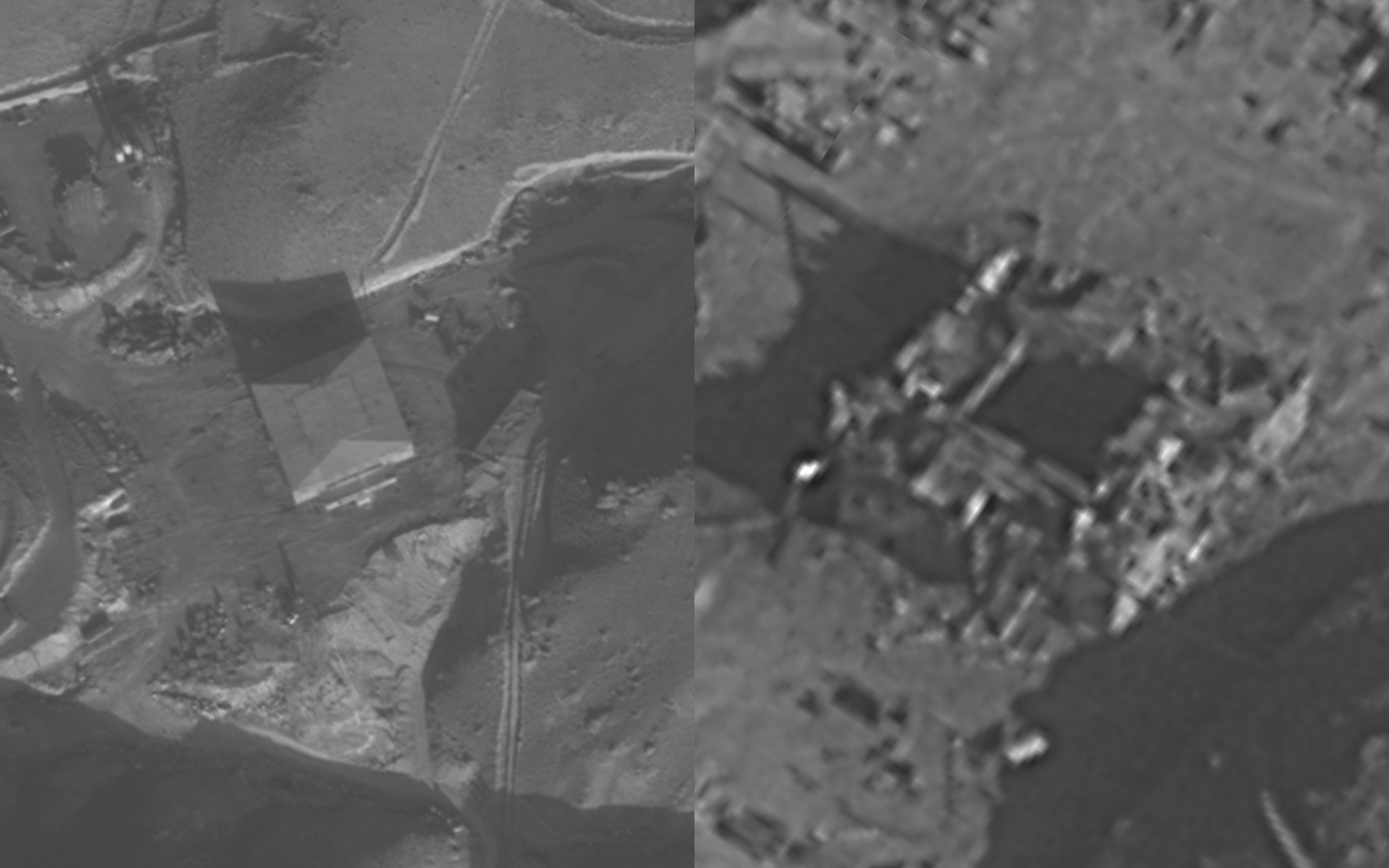
The Syrian al-Kibar nuclear reactor
before, left, and after, right, it was destroyed by Israel, on September
6, 2007. (Israel Defense Forces)
Blindsided by Gaddafi
The fact that Israel was aware of the possibility that Syria might be working on its own nuclear option was the direct consequence of a trauma suffered by Israeli intelligence at the end of 2003. That was when Libyan dictator Col. Muammar Gaddafi publicly admitted that he had been forging ahead with a nuclear weapons program.

Muammar Gaddafi (Jesse B. Awalt/Wikimedia Commons)
The Israelis had not completely ignored AQ Khan. They had strong evidence that he had helped Iran launch its unacknowledged nuclear weapons program. But they had not realized that his sales efforts had succeeded elsewhere.
Shabtai Shavit, who was the director of the Mossad in 1989-96, told the authors several years ago that Israeli intelligence had known about Khan’s travels in the Middle East, hawking his wares, but had not internalized how the Pakistani engineer could provide a quick and relatively easy kit for starting the journey toward a nuclear arsenal.

Former head of the Mossad, Shabtai Shavit. (Miriam Alster/Flash90)
After the revelation that Gaddafi’s Libya was dangerously advanced in its nuclear work, Israel’s military intelligence chiefs ordered that every scrap of evidence of Khan’s activities that had been collected, but filed away without much analysis, be looked at again.
Aman then found reports of AQ Khan’s visits to Saudi Arabia, Egypt, and Syria. Because the first two nations were allies of the United States, it seemed highly unlikely that they would covertly pursue nuclear weapons.

The book “Dr. A. Q. Khan on Science and
Education” shows Khan standing in front of a green chalkboard with his
design for a multipoint nuclear-bomb trigger featuring a neutron
initiator distinctly labeled in the middle of the warhead. (photo
credit: Courtesy)
The young new dictator was perceived as inexperienced and, unlike his father, unpredictable — a personality who could be tempted to act recklessly. Because his decisions across Israel’s northeastern border held the potential for devastating consequences, Aman commanders knew they could not afford to ignore or underestimate Assad.
“I had to explain to my people why I insisted on concerning ourselves with Syria,” recalls Brig. Gen. (ret.) Eli Ben-Meir, a research chief in Aman.
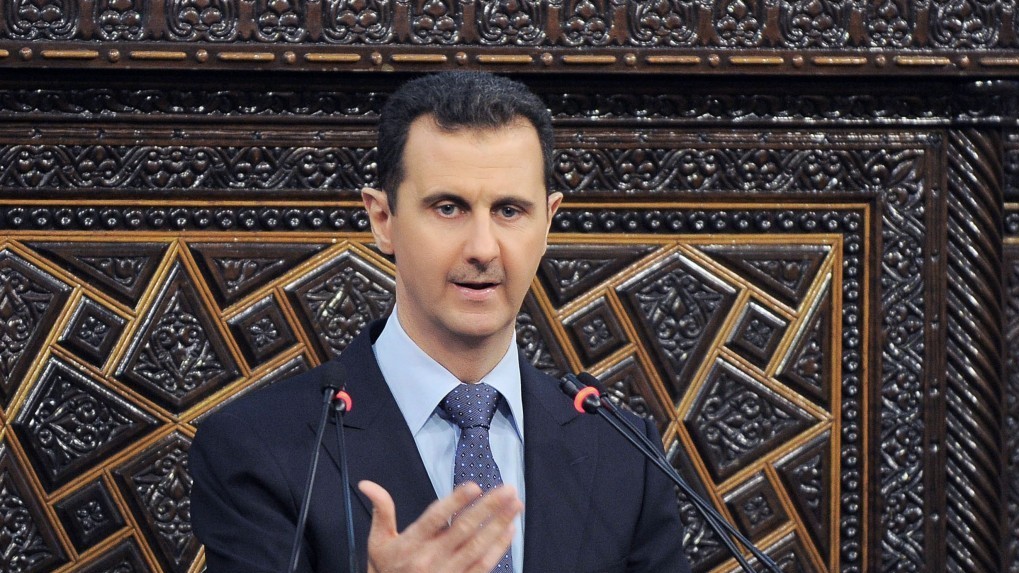
Syrian President Bashar Assad (SANA/AP)
Israel fought a bitter war against Hezbollah in the summer of 2006 that was marked by a constant battering of rockets from Lebanon, compelling almost a million Israelis in the north to enter bomb shelters or move temporarily to other parts of the country.
First clues, then the smoking gun
Now constantly monitoring Syria, Aman found clues that Assad was up to something, says Ben-Meir. Ships arrived from Asia with no apparent purpose. Trucks moved to the eastern part of the country.
Still, when Israel’s intelligence liaisons asked friendly services, including the CIA, if they had noticed anything of a nuclear nature in Syria, the answers came back negative.

Meir Dagan, left, Ariel Sharon, center,
and former Mossad head Efraim Halevy at a ceremony welcoming Dagan as
head of the Mossad, on December 12, 2002. (Flash90/File)
Ibrahim Othman, director of Syria’s Atomic Energy Commission, was considered to be the man who had to know the secret, if it existed. He became a high priority target for Israeli intelligence. But Othman, and other senior government officials in Damascus, were extremely cautious.
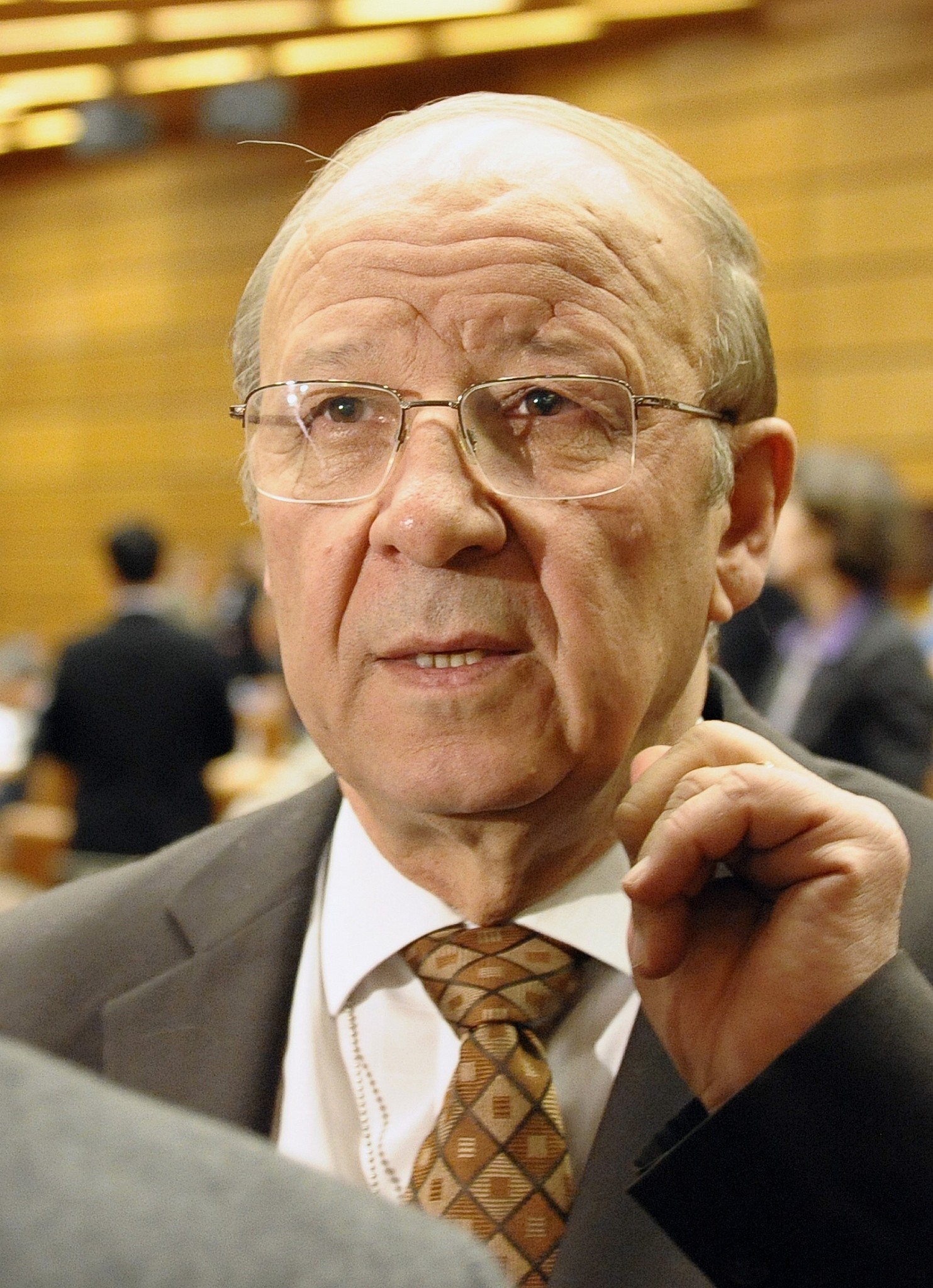
Ibrahim Othman, member of the Syrian Arab
Republic delegation, at an International Atomic Energy Agency, IAEA,
board meeting at Vienna’s International Center, on Nov. 27, 2008. (AP
Photo/Hans Punz)
However surprising this may seem in retrospect, nobody believed initially that vital information had been obtained, and so deciphering the material was not deemed an urgent priority. The data actually sat around for a few days until it was deciphered. “My intelligence officer entered my room,” recalls Ben-Barak “and showed me the photos taken from the device.” He pauses and smiles. “Sometimes intelligence operations need luck.”
The photos showed Othman in the company of several North Korean scientists. Most importantly, they featured the inside of a Syrian structure, which was clearly a nuclear reactor built to produce plutonium.

Then-US president George W. Bush welcomes
then-prime minister Ehud Olmert to the Oval Office of the White House,
May 2006 (Avi Ohayon/GPO/Flash90)
Bush did not say anything against an Israeli raid, however.
For Olmert, that US presidential silence was enough. He interpreted it, and rightly so, as an American green light, and instructed Ashkenazi to prepare an airstrike.
A power struggle between Olmert and his defense minister then evolved. Olmert wanted quick action. But, he told the authors, he sensed that Barak was employing delaying tactics. Olmert, who has just published his autobiography, believes that Barak hoped to succeed him as prime minister, and therefore wanted to postpone the operation and get the full credit for it.
Barak, in an interview with the authors, denied the claim. He simply wished to refine the operational plans, he says.

No comments:
Post a Comment