Israeli Air Force destroyed half of Syria’s air defenses, says senior officer
 “All of the batteries that fired on the IAF were
destroyed. All of them. And this policy will continue. We do not destroy
batteries that do not fire on us,” said a senior IAF officer.
“All of the batteries that fired on the IAF were
destroyed. All of them. And this policy will continue. We do not destroy
batteries that do not fire on us,” said a senior IAF officer.By: Yaakov Lappin, JNS.org
Some 50 percent of air-defense batteries belonging to the regime of Syrian President Bashar Assad have been destroyed after they fired on Israel Air Force jets in recent months during multiple operations, a senior Israeli Air Force source said on Wednesday.
The officer was speaking to reporters during an international airforce conference hosted in Israel, which brought together commanders from 20 foreign air-force establishments to discuss professional and operational matters with the IAF. Participants included the United States, the United Kingdom, Germany, Canada, Poland, Italy, Brazil, Greece and Romania.
He described Syria as having the most heavily guarded airspace in the world, with the highest number of surface-to-air missile batteries of all kinds scanning the skies.
“And we still have to operate in this strategic arena and still hit targets and maintain the IAF’s air superiority, which is the biggest challenge of the air force,” added the officer.
In recent months, during a number of Israeli airstrikes against aggressive Iranian activity in Syria between February and May, Syrian air-defense systems fired on Israeli jets “hundreds of times,” the source revealed. “In a single mission, they fired over 100 SAMS [surface-to-air missiles],” he said, referring to the May 10 Israeli operation to strike 50 Iranian targets across Syria in retaliation to Iranian rocket fire on the Golan Heights.
During the conference on Wednesday, IAF Commander Maj. Gen. Amikam Norkin held a joint press appearance with counterparts from Italy and the United Kingdom at Tel Nof air base, south of Tel Aviv.
“This [conference] is a part of our cooperation,” said Norkin. “We share operational knowledge, training knowledge, and we talk about how get air superiority as a means to regional stability.”
Lt. Gen. Enzo Vecciarelli, Chief of Staff of the Italian Air Force, said holding a dialogue with the IAF was valuable for his personnel. “We appreciate flying together. We enjoy the beauty of your country and the quality of this training machine,” he added.
‘Iran has its owns aspirations as a regional player’
According to the senior IAF source, “the fight to maintain air superiority is ongoing. We take risks to achieve our missions, and sometimes we pay the price. We understand the strategic context in which we live in, and we learn from our mistakes.”
He described the IAF’s missions of policing the region against the Iranian military buildup and enforcing Israel’s red lines as requiring “complexity, sensitivity, professionalism and determination.”
“This active defense campaign … is something we are doing because we have to be actively defending the State of Israel. It requires us to continually monitor and assess the risks in one of the most dangerous and sensitive places in the world. Why is it so dangerous? Every time you operate, there are operational risks. You can hit stuff you did not want to hit or personnel you did not want to hit. We are only trying to prevent offensive measures that are conducted by Iran.”
“Iran needs to work things out with the world, not just with Israel. We are high on the list, but we are not the only one. Iran has its own aspirations as a regional player. It is expanding its physical forces around the region when its economy is crumbling. Does it make sense? Not to me, but that is its long-range decision,” said the officer.
In confronting Israel directly in Syria, Iran did “not weigh the risks in the right way,” he continued. “I dare say, I think they will change their strategic decisions. It might take six months or a year … everything happening together is pushing Iran back. If I stand in Iran, that’s what I see. I have a feeling they are going to change. The question is: Which way? That, I do not know.”
‘Tunnel-busting’ techniques used for flying over Gaza
When operating over Gaza, the IAF has developed singular “tunnel-busting” techniques, the source said, without providing further details.
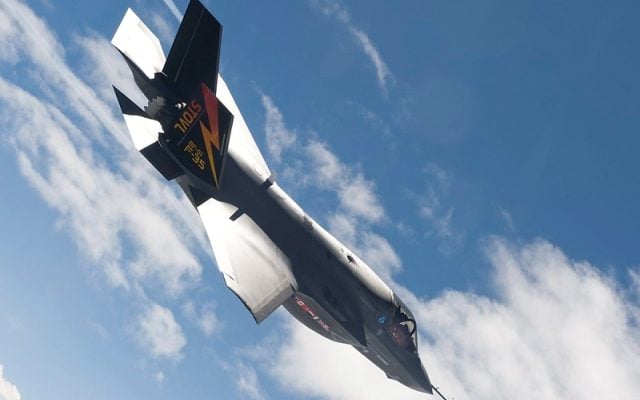
“The F-35 is really a remarkable platform. … It has many sensors on it which are very important to conducting missions,” said the source, especially in areas with dense air defenses. “The first thing it brings is situational awareness.”
“The challenges around us are keeping the small F-35 squadron on their toes. They have to move fast,” said the source.
Israel has received nine F-35s so far, and is due to receive a total of 50—two squadrons—in the coming years.
Throughout this complex era, Israel and Russia have succeeded in avoiding unintended clashes. “The Russians know very well that the IDF hasn’t come to attack Russia,” said the source.
At the same time, the arrival of advanced Russian radars in the region means that the IAF has to work harder to remain out of sight.
The IAF has learned to fly in “a way, that we won’t be noticed,” he said. These conditions have “actually made us better. … Things have developed much faster than we thought they would have.”

No comments:
Post a Comment