Sunday, December 15, 2013


At this point we have no idea how many people will become newly insured under ObamaCare. For the first year out, the number of people with insurance may actually go down! But the administration's goal is to insure an additional 30 million people and eventually a lot of those people will acquire health plans. When they do, the economic studies predict that they will try to double their use of the health care system.

Adding to this increased demand will be new mandated benefits. The administration never seems to tire of reminding seniors that they are entitled to a free annual checkup. Then there are new benefits for women, including free contraceptives. And all of us will be entitled to a long list of preventive services — with no deductible or copayment.

But the health care system can't possibly deliver on all these promises. The original ObamaCare bill actually had a line item for increased doctor training. But this provision was zeroed out before passage, probably to keep down the cost of health reform. The result will be increased rationing by waiting.

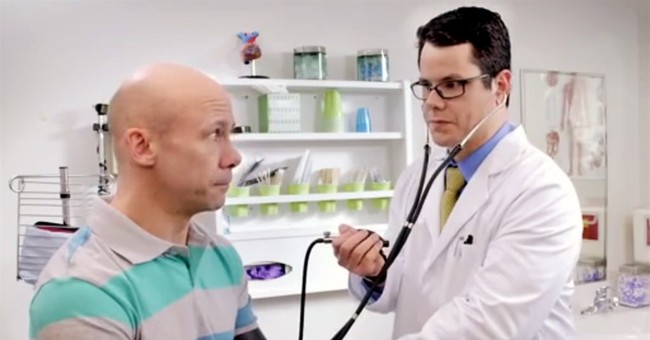
Take preventive care. The health reform law says that health insurance must cover the tests and procedures recommended by the U.S. Preventive Services Task Force. What would that involve? In the American Journal of Public Health, scholars at Duke University calculated that arranging for and counseling patients about all those screenings would require 1,773 hours of the average primary care physician's time each year, or 7.4 hours per working day.

And all of this time is time spent searching for problems and talking about the search. If the screenings turn up a real problem, there will have to be more testing and more counseling. Bottom line: To meet the promise of free preventive care nationwide, every family doctor in America would have to work full-time delivering it, leaving no time for all the other things they need to do.

When demand exceeds supply in a normal market, the price rises until it reaches a market-clearing level. But in this country, as in other developed nations, Americans do not primarily pay for care with their own money. They pay with time.

How long does it take you on the phone to make an appointment to see a doctor? How many days do you have to wait before she can see you? How long does it take to get to the doctor's office? Once there, how long do you have to wait before being seen? These are all non-price barriers to care, and there is substantial evidence that they are more important in deterring care than the fee the doctor charges, even for low-income patients.

For example, the average wait to see a new family doctor in this country is just under three weeks. But in Boston, with ObamaCare-type reform, the wait is about two months.

When people cannot find a primary care physician who will see them in a reasonable length of time, all too often they go to hospital emergency rooms. Yet one study found up to 20% of the patients who enter an emergency room leave without ever seeing a doctor, because they get tired of waiting. Be prepared for that situation to get worse.

When demand exceeds supply, doctors have a great deal of flexibility about who they see and when they see them. Not surprisingly, they tend to see those patients first who pay the highest fees. A New York Times survey of dermatologists in 2008, for example, found an extensive two-tiered system. For patients in need of services covered by Medicare, the typical wait to see a doctor was two or three weeks, and the appointments were made by answering machine.

However, for Botox and other treatments not covered by Medicare (and for which patients pay the market price out of pocket), appointments to see those same doctors were often available on the same day, and they were made by live receptionists.

As physicians increasingly have to allocate their time, patients in plans that pay below-market prices will likely wait longest. Those patients will be the elderly and the disabled on Medicare, low-income families on Medicaid, and (if the Massachusetts model is followed) people with subsidized insurance acquired in ObamaCare's newly created health insurance exchanges.

Their wait will only become longer as more and more Americans turn to concierge medicine for their care. Although the model differs from region to region and doctor to doctor, concierge medicine basically means that patients pay doctors to be their agents, rather than the agents of third-party payers such as insurance companies or government bureaucracies.

For a fee of roughly $1,500 to $2,000, for example, a Medicare patient can form a new relationship with a doctor. This usually includes same day or next-day appointments. It also usually means that patients can talk with their physicians by telephone and email. The physician helps the patient obtain tests, make appointments with specialists and in other ways negotiate an increasingly bureaucratic health care system.

Here is the problem. A typical primary care physician has about 2,500 patients (according to a 2009 study by the Centers for Disease Control and Prevention), but when he opens a concierge practice, he'll typically take about 500 patients with him (according to MDVIP, the largest organization of concierge doctors). That's about all he can handle, given the extra time and attention those patients are going to expect. But the 2,000 patients left behind now must find another physician. So in general, as concierge care grows, the strain on the rest of the system will become greater.

I predict that in the next several years concierge medicine will grow rapidly, and every senior who can afford one will have a concierge doctor. A lot of non-seniors will as well. We will quickly evolve into a two-tiered health care system, with those who can afford it getting more care and better care.

In the meantime, the most vulnerable populations may have less access to care than they had before ObamaCare became law.

Saturday, December 14, 2013

Obama makes another tragedy all about himself

One year ago today 26 people...20 of which were children...were brutally slaughtered in Sandy Hook, Connecticut. To honor those lost the families asked that the press NOT take any pictures at the Memorial Services going on today. The press honored their wishes but our POS POTUS used this tragedy to have yet more pictures taken of himself thus totally ignoring the families wishes. A decent man...a decent president...would have lit the Memorial candles in private but NOT Barack HUSSEIN Obama for in being 'all about the children' it's really just all about himself...period.

Never forget...

Today is 3 years since Brian Terry was killed and NO one 
has been called to task as of yet. Like Benghazi and Extortion 17 just another thing swept under the Obama rug. 
NEVER forget and let's fight on for justice for them all.


Democratic National Chairman Debbie Wasserman Schultz says that Obamacare will be a vote-winner for Democrats in 2014. Senate Majority Leader Harry Reid says the same thing.

Perhaps they really believe that. But the numbers in polls conducted since Oct. 17, when the end of the government shutdown put the spotlight on the rollout of Obamacare, tell a different story.

Democrats currently hold a 55-45 majority in the Senate. Republicans need a net gain of six seats to win a majority there.

This looks to be within reach. Seven Democratic-held seats are up in states carried by Mitt Romney.

And four Democratic incumbents are seeking re-election in target states in the 2012 presidential election.

In three Romney states -- Montana, West Virginia, South Dakota -- Democratic incumbents are retiring. The likely Republican nominees, two current House members and a former governor, have been leading by wide margins. These are not gimmes yet, but they probably will be.

Of the four incumbent Democrats running in Romney states, only one, Alaska's Mark Begich, has a statistically significant lead in the most recent public poll. But it was conducted in August.

A Republican poll last weekend in Arkansas found challenger Tom Cotton leading Mark Pryor 48-41. That's a significant difference from pre-Oct. 17 polling showing an even race -- and that's bad news for an incumbent.

The latest Louisiana poll has incumbent Mary Landrieu at 41 percent in the state's all-candidate primary. That's well below the 48 percent she got in an August Democratic poll.

The most frequent polling in these races comes from North Carolina, where the Democratic firm PPP has matched incumbent Kay Hagan against several Republicans 12 times in the last year.

In the first 10 polls, Hagan led controversial state House Speaker Thom Tillis by an average of 48 to 38 percent. In two polls conducted since the Obamacare rollout began, Hagan's lead was down to a perilous 44 to 42 percent.

Races have been tightening in 2012 target states too. Colorado Democrat Mark Udall led 2010 Republican nominee Ken Buck 50-35 last June -- post-rollout, his leads were 45-42 and 46-42.
 
In 2012 Mitt Romney carried Colorado whites 54-44 but lost Hispanics 75-23. Given Barack Obama's big post-rollout slide among Hispanics nationally, Udall may have difficulty matching Obama's Hispanic numbers.

Democratic Rep. Bruce Braley has been the favorite to replace retiring Iowa Sen. Tom Harkin. But a Republican December poll showed Braley with only 40 to 42 percent support and just 3 to 6 points ahead of five Republicans that have limited name recognition.

Pre-rollout polls showed New Hampshire incumbent Jeanne Shaheen with double-digit leads over state Republicans. But she led former Massachusetts Sen. Scott Brown by only 48-44, and Brown now seems interested in the race.

Obama carried Michigan 54-45 in 2012. But a Democratic poll this month shows Republican Terri Lynn Land leading Democrat Gary Peters 42-40. Neither is well-known. But the Republican label seems surprisingly strong in a state where Republicans have won just one Senate race in the last 40 years.

So Republicans have plausible chances to gain as many as 11 seats. But there are countervailing factors.

Republicans nominated some astonishingly weak candidates in winnable races in 2010 and 2012, and Democrats hope they will do so again in Georgia, where Michelle Nunn, daughter of former Democratic Sen. Sam Nunn, has been running roughly even with -- or a bit ahead of -- various Republicans.

And Democrats have hopes of depicting Senate Minority Leader Mitch McConnell as a Washington insider and toppling him in Kentucky, despite the state's anti-Obama leanings.

That being said, National Journal's survey of Washington political insiders shows most Republicans and a near-majority of Democrats predicting a Republican Senate majority. That's noteworthy, because these insiders, who spend so much time with incumbents, didn't predict party takeovers in 2006 and 2010 at this point in those election cycles.

The Obamacare rollout has also shifted opinion on the generic vote -- which party's candidate do you support for the House of Representatives? When the shutdown ended, Democrats led 47-41 in Real Clear Politics' average of recent polls.

Now, Republicans lead 44-41 on the question that has often underestimated actual GOP performance.

Analysts Stuart Rothenberg and Larry Sabato see more than 20 Democratic House seats at serious risk.

All this could change if public opinion on Obamacare -- or Obama -- shifts once again. But it looks like recent obituaries of the Republican Party were premature.


If you have just returned from a space mission on a spaceship without Internet access and some Kool-Aid-drinking liberal has assured you the disastrous Obamacare problems are behind us, let me do my part to help deprogram you. 
 
The website problems were too numerous to count, and they are just the tip of the Obamacare iceberg. The substantive problems with Obamacare are enormous. Oh, and the website problems continue, as well.

Obama is not about to abandon this law, because he cares more about fundamentally transforming the nation than he even does about his approval ratings, which have reached an all-time low. Besides, if he's lost the public's trust, it's not his fault but ours, because, to paraphrase Valerie Jarrett, we are just not quite capable of fathoming his surpassing greatness, and we'll eventually recover our senses.

As a returning cloistered astronaut who has just emerged from his propaganda session with the Obamabot, you should hear some highlights about Obamacare from just the past few days' news.

The Obamacare website has reportedly violated the Federal Information Security Management Act by failing to perform a series of security control assessment tests.

The Department of Health and Human Services reports that just 365,000 people have signed up for private health insurance under the new law, which is abysmally far from its already meager goal of signing 1.2 million by the end of November. Most of these came from the 14 state exchanges, and only 137,000 came from the federal website, HealthCare.gov. As some 5 million have already lost coverage because of Obamacare, it's hard to imagine how the law won't result in millions more people losing their coverage than new people acquiring it, even counting the 800,000 new Medicaid enrollees. All the while, HHS Secretary Kathleen Sebelius falsely assures Congress that everything's fine, saying, "We are seeing very, very positive trends" now that HealthCare.gov is supposedly working better.

Some who have signed up for coverage on the website are receiving email notices informing them they shouldn't assume they are covered unless they "have seen the Confirmation Letter from the Disbursing Office!"

Indeed, according to insurance industry consultants, those who have signed up for coverage may find that their coverage has lapsed because to secure coverage, a customer's premiums first must be paid.

Reportedly, only 5 percent of Obamacare enrollees have paid at this point.

The Washington Post reports that patients with high medical bills are having difficulties determining which plans on the exchange fit their particular needs. In the website chaos, this information is far from readily obtainable.

Reuters cites a Cornell University study showing that just half of the country's psychiatrists are likely to accept Obamacare.

Only 7,000 people in Illinois have signed up for Obamacare. In Missouri, the scorched-earth law may cause major cuts in hours for substitute teachers and a potential fine of $150,000 for public schools.

A little-known regulation from the Centers for Medicare and Medicaid Services may cause as many as 3.5 million poor and elderly people to lose home health care coverage beginning Jan. 1.

It's now common knowledge that Obamacare exchanges are excluding many physicians, hospitals and drugs, and a panel of doctors will testify before the House Committee on Oversight and Government Reform that they are being dropped from patient provider networks because of Obamacare.

Sebelius refuses to provide straight answers to questions about whether and how often she met with President Obama about Obamacare and the website prior to the rollout.

Adding insult to injury, HHS is obstructing a congressional investigation by instructing contractors working on the website not to release documents to the investigators.

While we are treating Obama's fraudulent promises on Obamacare as past-tense deceit, we may be overlooking his ongoing duplicity. As The Wall Street Journal's editors also observe, "the reason for all this obstruction and statistical juking is so the White House can get the press corps and Democrats to believe that the worst is over and that ObamaCare is now rolling toward success. ... But it's impossible for an outsider to know what the truth really is because HHS and the White House continue to manipulate and bury the real statistics."

There's one other thing I want you space travelers to understand before we end this session. Our indignation over Obama's lies about our ability to keep our plans and doctors is wholly justified, but let's not overlook another consequence of this betrayal beyond the government's outrageous severance of our freedoms and personal relationships with our health care providers. Obamacare's exclusion of doctors and hospitals from the exchanges necessarily means a reduction in the quality of health care overall, thus negating one of the main ostensible purposes of this abominable law in the first place.

Next time you decide to go on a space mission, demand Web access and give me your email address.
Boehner Eats His Young
By DICK MORRIS
Published on DickMorris.com


House Speaker John Boehner would not be House Speaker John Boehner if it were not for the tea party and the other conservative groups he now criticizes. He says that they "lack all credibility" and accuses them of "using our members [Congressmen] and the American people for their own goals."

Asked about the criticism leveled at the budget deal by conservative groups, the said "Are you kidding me? I don't care what they do."
His comments immediately drew admiring praise from Democratic Senate Majority Leader Harry Reid who said his comments were "a breath of fresh air."

Has the world turned upside down? If it were not for these groups -- the Tea Party Patriots, Heritage Action for America or others -- the Republicans would have lost the elections of 2010 and he never would have been Speaker.

The grass- and cyber-roots enthusiasm of these conservative groups animate the Republican Party in the same way that groups like Occupy Wall Street and Moveon.org provide a shot in the arm for their party.

Without their hard work, outreach, enthusiasm and donations, the Republican Party would never have won in 2010 and won't win in the future. And House Speaker John Boehner better realize it. If he doesn't, perhaps his members will and will reacquaint him with reality.

Without the tea party, the Republican Party would be an inarticulate, me-too party without ideas or energy.

The Republican Party has always represented a fusion of two broad groups: those who are driven by ideology and those who grew up in geographic areas that are traditionally Republican and joined the party because it was the obvious way to enter politics.

Call them the Nixon Republicans, these folks live in suburbs or small towns and represent the equivalent of the urban big city machines that spawn and nurture Democrats.

But this party could not get elected. It would not have defeated Jimmy Carter in 1980 or elected Ronald Reagan. It would not have been the vehicle for the Gingrich Revolution of 1994, nor would it have taken the House in 2010.

It required a Reagan, a Newt Gingrich, a Ted Cruz, a Paul Ryan, a Mike Huckabee, or the like to animate it, fill it with ideas and carry it to victory.

For Boehner to cast aside these party enthusiasts and conservative workhorses is shortsighted and ungrateful in the extreme.

The tea party types are amateurs. They are small businesspeople, retired military, doctors and so forth that are professionals in their occupations but amateurs in politics. We need to be patient with their learning curve. They learned a lesson in October when the government shutdown backfired. And they won't make that mistake again. Indeed, their basic acceptance of the Ryan-Murray deal indicates precisely that growth of perspective and maturity.

In this light, the Speaker's comments are outrageous and cast real doubt on his ability to lead the House in the future.
Newsmax                                                                      Wis. Gov. Walker Pushing Plan to Sidestep Obamacare
By Cathy Burke:


  • 0
    Shar

Wisconsin Gov. Scott Walker has a plan to sidestep Obamacare – and his novel idea is gaining traction, according to reports.

Walker reportedly wants to let the uninsured use tax credits to buy plans offered on the federal online exchanges directly from the insurance companies.

"Basically, our number one concern right now should be getting folks health insurance. Given the website problems, that suggests the value of a pilot of the type proposed here," Jonathan Gruber, an economist at the Massachusetts Institute of Technology, told The Journal Sentinel in Milwaukee.

Gruber was involved in both the Massachusetts universal coverage plan, and the Affordable Care Act.

The plan will need the approval of Health and Human Services.

“If they don't approve this, this is ultimately exposing that this isn't really about access and this isn't about affordability,” Walker told Fox News Thursday. “It's about government playing a heavier hand in these kinds of decisions.”

Wisconsin's insurance commissioner, Ted Nickel, is asking HHS to include the state in a pilot program to let consumers go right to insurance carriers for coverage available through online exchanges; the newspaper reported the direct enrollment option is already included in Obamacare as it was originally written.

"Given that it's not working and [consumers] were promised subsidies, there's got to be a better way," Nickel’s spokesman, J.P. Wieske, told the newspaper.

Gruber supports a short-term plan to let buyers get insurance on the exchanges directly from the carriers, but warns against allowing consumers use their tax credit in search of a plan outside the exchange market.

"If the young and healthy can use the tax credit to stay out of the reformed insurance market, then it will worsen the price increase in that market,” he told the newspaper.

Fox News noted the Walker plan – and other GOP alternatives – fly in the face of Obama’s Dec. 3 assertion Republicans want only to “go back to the way things used to be.”

GOP plans are generally consumer driven, Ed Haislmaier of The Heritage Group told Fox News.

“The patient makes choices,” he said.

Still, Gruber told Fox News other plans can’t go as far as the Affordable Care Act.

“I’ve yet to hear a Republican alternative which covers nearly as many uninsured or even half as many uninsured or offers evidence-based solutions to the health care cost crisis,” he told Fox News.